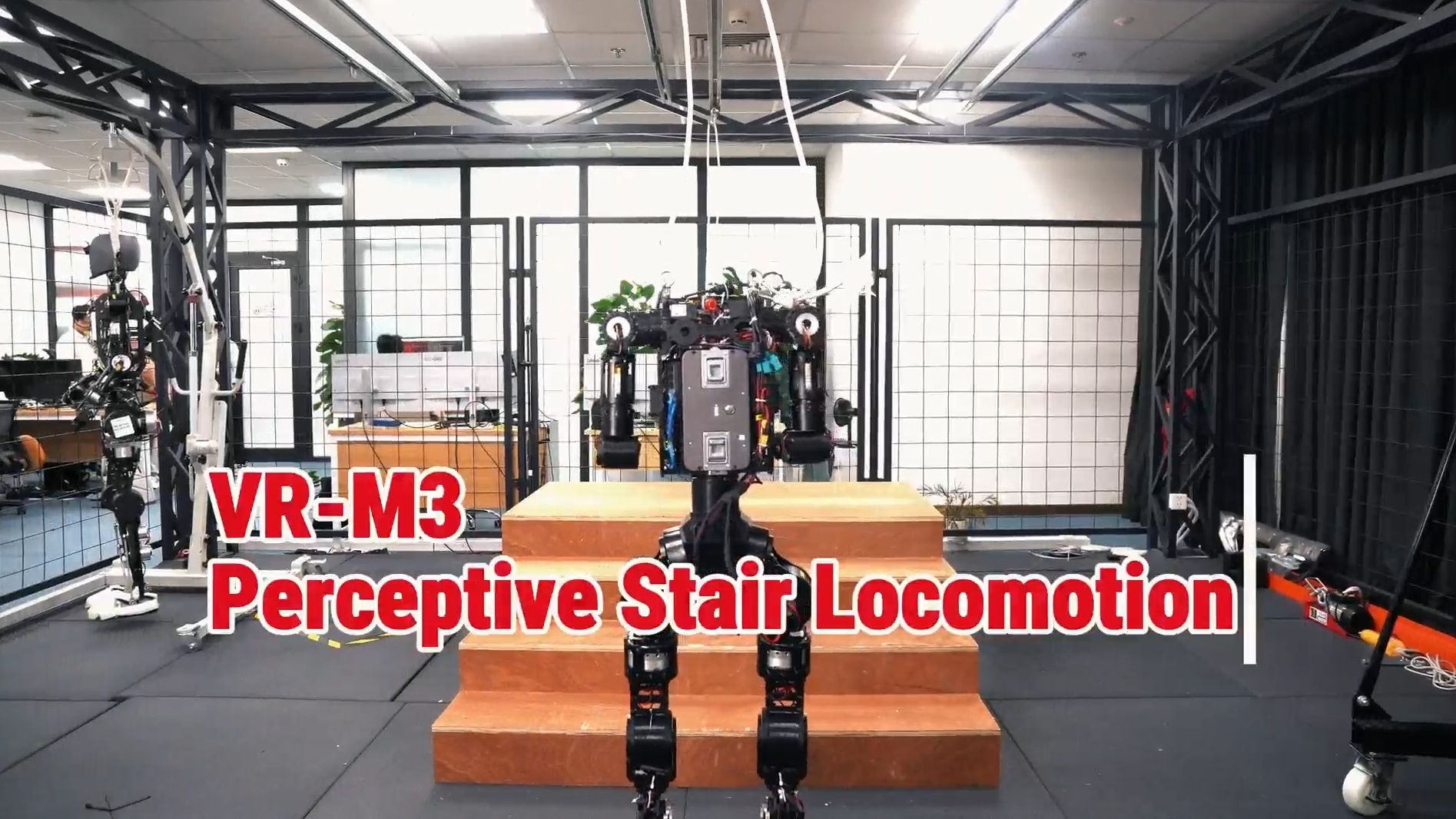
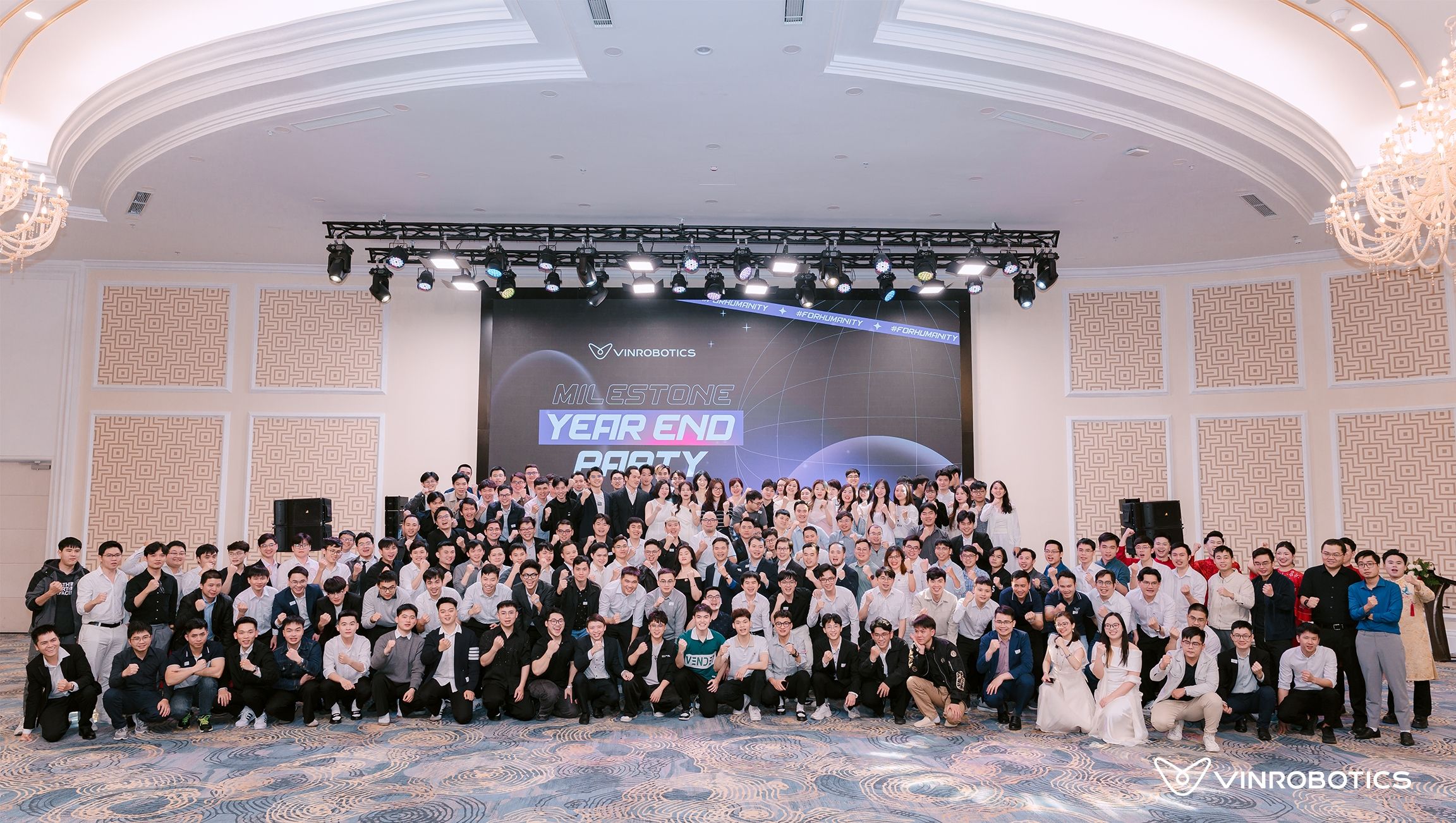
Expert Insights: From Textile to “Tactile Factories", Vietnam’s Manufacturing Base Is Poised to Power the Humanoid AI Era
From a practitioner’s perspective, Mr. Ngo Quoc Hung, CEO of VinRobotics, shares his insights on the emerging wave of robotics and automation in Vietnam in an interview with VinVentures, published in the Vietnam Tech & Venture Capital Outlook 2025: Redefining Growth for the New Era report.
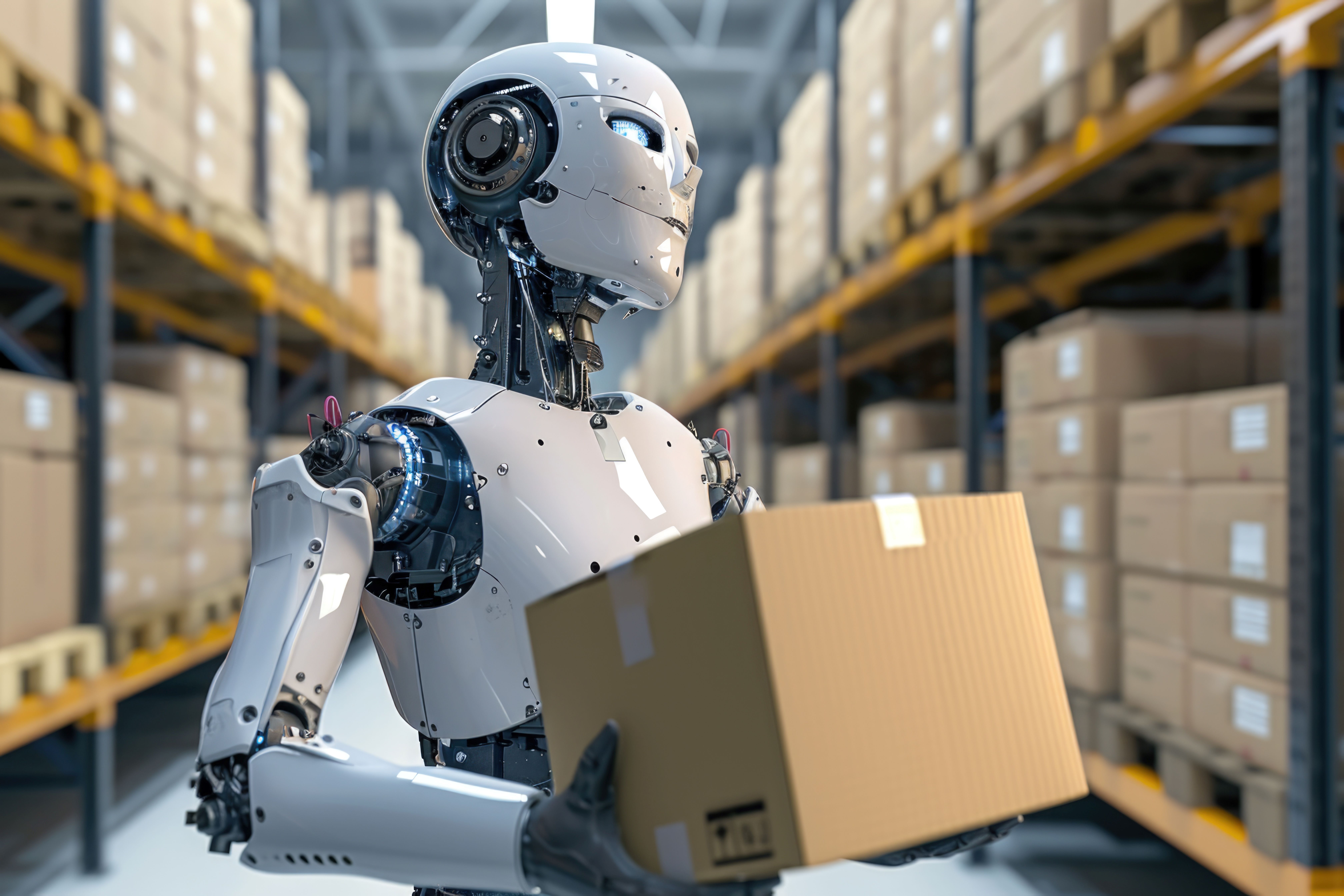
A question many are curious about: VinGroup has launched several humanoid-focused companies. How are our companies different?
Our domains are clearly differentiated and complementary. VinRobotics focuses on industrial humanoids and intelligent robotics for factory environments, starting with VinFast. VinMotion is oriented toward service robots within ecosystems such as VinHomes and VinPearl, while VinDynamics addresses home, security, and patrol applications.
Why did VinRobotics choose to begin with industrial humanoids?
Manufacturing environments are semi-structured. Layouts are defined, safety zones are clear, and task families are related even as details change. That makes learning faster, deployment safer, and iteration more efficient. Homes and service environments are highly unstructured: different layouts, behaviors, habits, and safety constraints, which require a much higher level of general intelligence. Factories also face acute labor shortages and rising costs, creating immediate demand and a clear path to value creation.
Some critics argue that humanoid robots are unnecessarily complex for industry, and that specialized robots are sufficient. What is your view?
Specialized robots remain highly effective for stable, well-defined tasks and will continue to anchor industrial automation. The challenge is that modern factories are increasingly dynamic, with frequent product changes, evolving layouts, and operational exceptions. In this context, integration, not hardware, has become the dominant cost. Automation has evolved in layers, from fixed robotic arms to mobile platforms and AI-enabled systems with autonomous perception and manipulation. Each layer added flexibility, but integration time and cost are still high. Humanoids represent the next layer because they address environmental compatibility. Factories were designed for humans. A “drop in” humanoid can operate within these human-centric settings and switch tasks with minimal reconfiguration, reducing the marginal cost of change at scale - the core economic rationale behind industrial humanoids.
If humanoids represent the long-term future, why don’t we focus exclusively on them?
Humanoids and other intelligent/autonomous robots solve different problems and will coexist in factories for a long time. Manufacturing environments are heterogeneous, and no single form factor fits every task. Developing both in parallel allows us to deploy earlier, collect real operational data, and build deep integration expertise. Because the core technologies like perception, manipulation, motion, and foundation models are shared, this hybrid approach accelerates learning and lays the groundwork for humanoids to scale commercially.
Hardware is often cited as the hardest part of humanoids. Do you agree?
Historically, yes. Today, hardware is rapidly commoditizing due to advances in mass production of electric vehicles and industrial robotics. Actuators, motors, gearboxes, and sensors are becoming more capable and affordable. The real challenge has shifted to integration. All the components exist: AI models, control systems, hardware. But making them work together reliably, in real time, at acceptable cost, and inside real business processes is extremely difficult. This is where many AI and robotics projects fail. Long-term competitiveness depends far more on integration capability than on any single breakthrough component.
How about software?
Software is the decisive layer. Beyond AI models, it includes real-time control, safety systems, communication across actuators, and integration with enterprise systems like MES and ERP. The next frontier of AI is physical intelligence. Language models have largely consumed the Internet’s data. Physical AI requires data from the real world: motion, touch, force, and task execution. That data can only be obtained through real deployment.
How do you validate progress beyond prototypes and demos?
We validate in real usecases for factories and warehouses. In July 2025, we deployed into a production environment and demonstrated our humanoids can autonomously finish a highly difficult task trained using teleoperations: lifting large car parts and placing them precisely onto jig and fixtures with tight alignment tolerances. That proved our core technology stack works in real industrial conditions. The next challenge is execution at scale: improving cycle time, reliability, and success rates so performance matches and surpasses that of a human worker.
Cost competition with China is often raised as a concern. How do you address that?
Pricing only emerges once a product reaches maturity and mass production. Until then, we continue to learn and optimize against global best practices. Pricing competition with China is not merely about matching component costs, but about building a faster learning, innovating, and scaling flywheel. While China benefits from volume, our edge comes from deployment within a strong ecosystem, faster iteration, and full/native-stack control that accelerates innovations.
Vietnam entered the humanoid race after developed nations, where do our competitive edge come from?
Vietnam’s advantage extends well beyond labor cost. Our country has strong local engineering teams capable of fast integration and on-site execution—capabilities that are very expensive in developed markets. Beyond the Vingroup ecosystem, Vietnam’s dense manufacturing base also gives other robotics companies access to real-world environments for data acquisition, deployment, testing, and iteration, supported by relatively open and pragmatic policy conditions as well as geopolitical importance.
Looking ahead, what would success look like for VinRobotics?
In the near term, success means humanoid robots working autonomously alongside humans in factories and warehouses with affordability, utility and reliability comparable to a real worker. Over the long term, success means building a machine workforce at global scale—one that augments human labor and creates lasting economic value. If we achieve these, VinRobotics will be among a very few companies that have moved humanoids beyond videos and demos.
What advice would you give to young engineers and founders building humanoids today?
First, set realistic expectations and build on strong fundamentals. Humanoid robotics is neither the instant science fiction we often see in movies nor a distant fantasy. Progress comes through disciplined, execution-driven, strategic development. Second, resist the temptation to optimize for impressive demos or short-term visibility. Physical AI only compounds when robots perform real work safely, reliably, and under constraints. Finally, success depends on the fundamentals: math, algorithms, perception, optimal control and motion planning, machine learning, system design and integration. The deepest learning happens in practical usecases, through difficult and unglamorous tasks, where patience, rigor, and real utility ultimately compound.
By VinVentures
Related News